


 STORIES FROM TUSCANY
Crete Senesi wind-farm dispute: landscape and energy at the heart of opposition to ten turbines
The H002 – Asciano proposal envisages 72 MW. Local officials, farmers and associations challenge the location as the dispute returns to national attention.
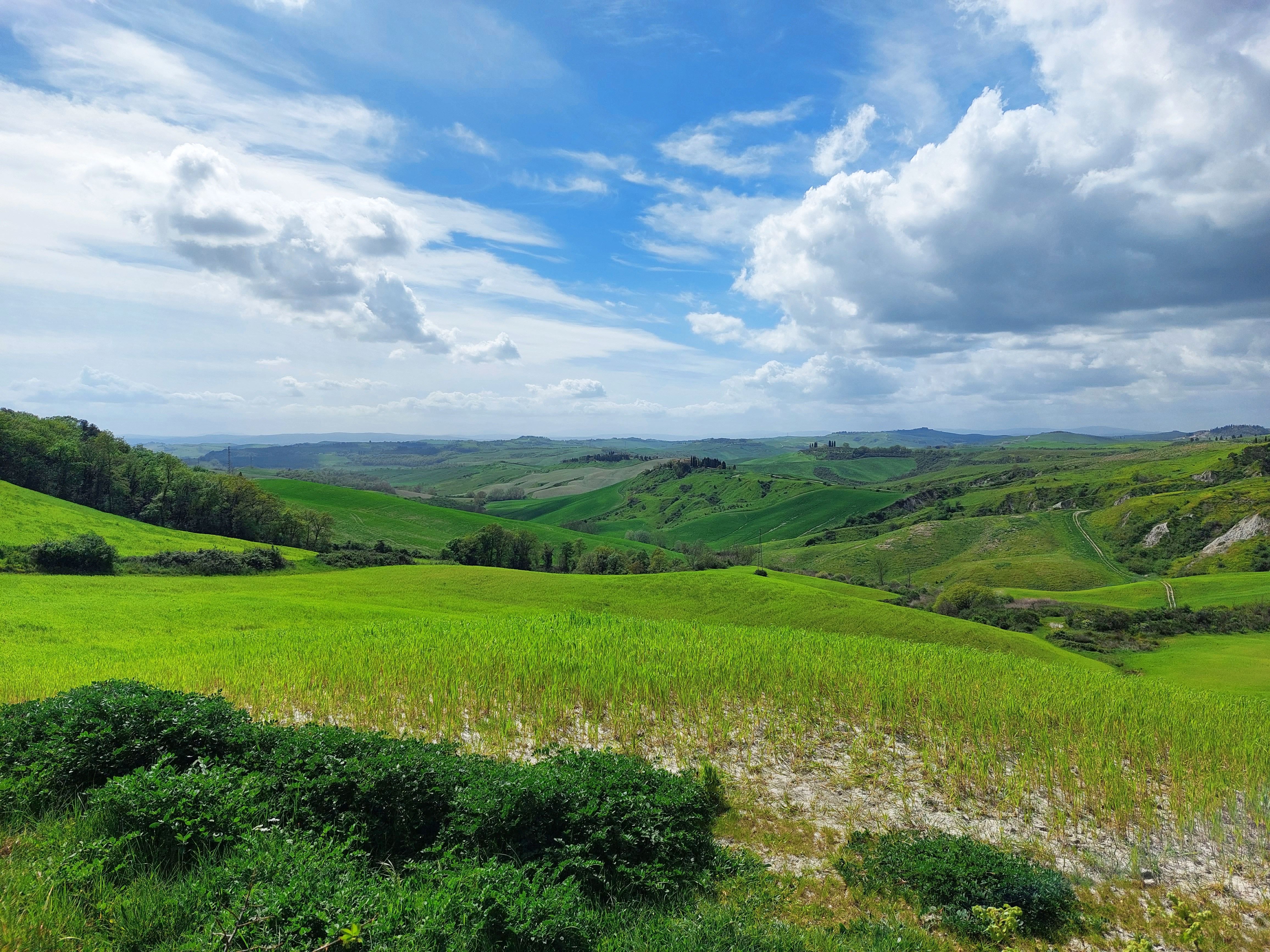

A proposal for ten wind turbines in the Crete Senesi has brought local officials, farmers and associations together in opposition. Paolo Virtuani’s report in Corriere della Sera on 15 November returns the H002 – Asciano project to national attention. The dispute concerns one of Tuscany’s best-known landscapes and the relationship between renewable energy, protection of the countryside and businesses that depend on its character.
The Environment Ministry’s project listing describes ten turbines with a combined nominal capacity of 72 MW in the municipality of Asciano. Parliamentary records trace the initial application to February 2025 and the subsequent transfer of the procedure to Gruppo Visconti Asciano. Senate documents describe towers approximately 200 metres tall. Listing a project in an environmental assessment procedure does not itself mean construction has been authorised.
The Corriere report records opposition from Asciano mayor Fabrizio Nucci, the Difendiamo le Crete Senesi committee and farming and environmental organisations. The mayor distinguishes opposition to this location from rejection of renewables and points to geothermal energy and solar power as alternatives. The newspaper also reports opposition from regional president Eugenio Giani. These positions are attributed to the newspaper; La Contrada did not conduct the interviews.
Objections focus on visual impact, associated infrastructure and possible consequences for farm stays and agricultural businesses. Opponents argue that the landscape is an economic asset developed over time. This does not establish future damage or a quantified loss of income: these remain risks raised in the debate.
The dispute has also reached Parliament. A September 2026 question refers to the ten towers and environmental procedure, asking for protection of the Crete Senesi. The controversy therefore predates today’s newspaper coverage and has an existing documentary history.
Further developments must be assessed through procedural documents, additional submissions by the developer and authorities’ evaluations. Questions about wind resources, landscape compatibility and economic effects require verifiable technical answers. Political opposition is distinct from an administrative refusal, just as an industrial proposal is distinct from an authorised construction site.
Source: MASE — progetto H002 – Asciano · published on 15 Nov 2026. Checked on 15 Nov 2026.
Read the original source ↗Original summary of Paolo Virtuani’s report in Corriere della Sera, 15 November 2026, page 26, consulted in a copy supplied to the newsroom, with project details checked against MASE and Senate records. No final approval or refusal has been verified.